Back to Blogs
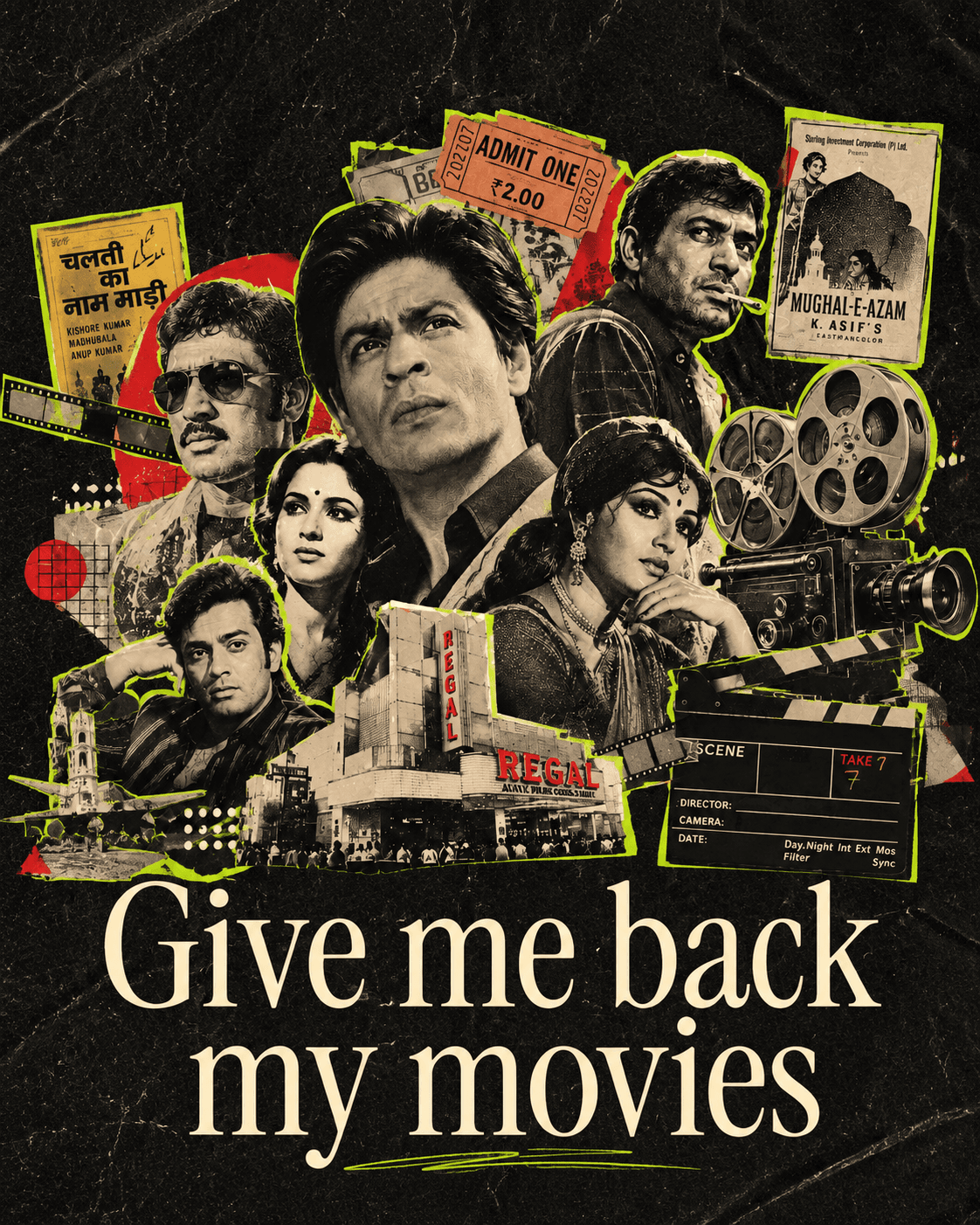
Give Me Back My Movies
Movies are losing their magic because the marketing team and we stopped
letti ng them keep the secrets.
There's No Biz Like Show Biz
That line meant something once. Show business used to run on spectacle and
illusion, things bigger and stranger than real life. Nobody wanted the truth from
a movie screen. They wanted something they couldn't get anywhere else. The
whole pitch of show business was simple: this isn't real, and you're going to
love that it isn't.
Movies were about dreaming
A film was supposed to hand you two hours you couldn't have anywhere else.
Worlds that didn't obey your rules. Faces bigger than buildings, doing things no
one around you could do. That was the whole contract: you paid for the dream,
not for your own life reflected back at you with better lighting.
Now the highest compliment a film gets is "so relatable." Relatable is a fine word
for a friend. It's a strange thing to want from a dream.
Content has become too relatable
Relatable content doesn't ask anything of you. It confirms what you already are.
Dreaming asked you to leave that behind for a while. We've slowly optimised for
the confirmation instead of the escape and called it good storytelling.
Art is supposed to be mysterious and stop showing me how it's made
Here's the real damage. A stunt lands on screen and looks impossible until the
BTS reel drops the next morning. Alfred Hitchcock said there's no terror in the
bang, only in the anticipation of it. Every "making of" video is a small assassination
of that anticipation.
"We are now having a very innocent little chat. Let's suppose that there is
a bomb under this table between us. Nothing happens, and then all of a
sudden, boom, there's an explosion. The public is surprised, prior to which
it has seen an ordinary scene, of no special consequence. Now, let's take a
suspense situation. The bomb is underneath the table and the public knows
it... The public is agonizing because it's warning the character on the
screen: 'You shouldn't be talking about such trivial matters. There is a
bomb beneath you and it's going to blow you to sky high.'"
Horror and sci-fi take the worst hit here. You cannot fear a ghost you watched a
stunt coordinator rehearse in knee pads under studio lights. The genre runs entirely
on not knowing where the threat is standing.
Nobody handed out a "how it was painted" pamphlet next to great paintings. The
not-knowing wasn't a gap to be filled. It was the exhibit.
AI is making people think "I can also do it"
This is the quieter version of the same wound. Art's mystery was never really about
the technique. It was the assumption that a human sat with something they couldn't
fully explain and wrestled it into shape. Generate the same frame in ninety seconds
from a prompt, and that assumption is gone. If anyone can make it, admiration turns
into shrugging.
We lost the charm of something that didn't look like reality
Add it up and it's one loss wearing five different outfits: dreaming replaced by
relating, mystery replaced by explaining, human effort replaced by prompts. Every
version points the same direction toward things that look exactly like life, made by
processes we now fully understand, admired for about four days before the next
explainer drops.
The old ad films understood this without saying it out loud: the Fevicol gags, the
ZooZoos, none of it explained itself. That's still the only reason we talk about them
decades later.
Right now, telling the backstage story is treated as good commercialisation. Studios
release it after the film, as a bonus, a retention tool, a second wave of engagement.
That's cinema agreeing to sell the secret first and the wonder second and calling
it a marketing win.
Next time, try not to watch the BTS and don’t dig the hidden details in the trailer.
Pegboard Picnics™ is a Pegboard initiative.
@2026 All Rights Reserved